
Experience at CONEXPO-CON/AGG! The Construction DX Revolution Opened by High-Precision Positioning × AR Navigation
By LRTK Team (Lefixea Inc.)

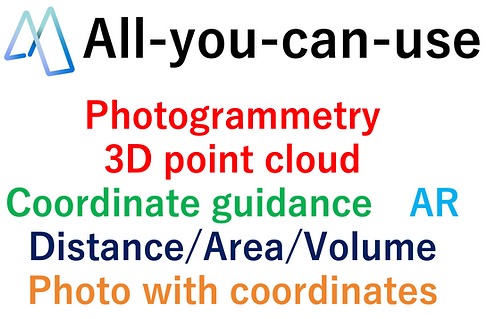
At CONEXPO-CON/AGG, one of the largest trade shows in the construction industry, you can directly experience the transformations that the latest technologies bring to job sites. Among the highlights was the wave of construction DX (digital transformation) created by combining high-precision positioning technology with AR (augmented reality) navigation. This article explains the exhibition overview and delves into the evolution of high-precision positioning technologies such as RTK, benefits of on-site adoption, applications of AR navigation on construction sites, as-built management using point-cloud scanning, and the gap in construction DX between overseas and Japan. It also covers examples of lightweight, intuitive mobile DX solutions using iPhone and iPad, ease of operation for anyone, ease of on-site adoption, reactions at the exhibition and industry focal points, and the value of automation and labor-saving solutions in an era of DX-skilled labor shortages. Finally, as the infrastructure supporting the accuracy of AR guidance and point-cloud measurement, we introduce the simple surveying device “LRTK” and outline prospects for its natural introduction to job sites.
CONEXPO-CON/AGG, one of the world’s largest construction shows, and the trend of construction DX
CONEXPO-CON/AGG is one of the world’s largest construction machinery and construction technology exhibitions, held every three years in Las Vegas, USA. More than 2,000 companies exhibit, ranging from the latest heavy equipment to cutting-edge software; at the previous 2023 show, over 130,000 industry professionals attended. In the vast venue, various trends that presage the future of construction are showcased.
Acceleration of construction DX: What stood out across the venue was the acceleration of digitization and smartification of construction processes, i.e., construction DX. Initiatives to centrally utilize information from surveying and design data through to construction management, and cloud services that connect sites and offices in real time, were introduced throughout. The shift from traditional reliance on drawings and paper documents to data sharing and visualization using tablets and the cloud is becoming an industry-wide trend.
Automation and robotics for construction equipment: Many booths also highlighted automation technologies for construction machinery. Demonstrations using AI and robotics to remotely operate or enable autonomous movement of heavy equipment attracted audience interest. Exhibits suggesting a future of unmanned construction included driverless loaders without cabs (e.g., Bobcat’s RogueX) and retrofit kits to automate existing bulldozers (e.g., Teleo). With a shortage of workers, these automation technologies are expected to improve productivity and ensure safety.
High-precision construction and machine guidance: Another important theme was high-precision construction enabled by sensors and satellite positioning. Examples included machine guidance technologies that control the blade position of bulldozers and excavators to the centimeter level and cases where terrain measurement data from drones and laser scanners are fed back into construction, emphasizing reduced rework and improved quality through high-precision construction. On-site comments such as “we can complete earthworks exactly according to the design in one pass” and “survey rework has been drastically reduced” were heard, drawing attention to the cost-saving effects created by high accuracy.
Experience-based solutions using AR/VR: At this exhibition, use of AR (augmented reality) and VR (virtual reality) to visualize job sites also attracted attention among digital technologies. For example, a heavy-equipment manufacturer’s booth provided a mixed-reality (MR) headset simulator that allowed operation training of machinery in a virtual environment. Another booth offered an AR demo where pointing a tablet produced a 3D model of equipment in front of you, guiding operating procedures, which amazed participants. In this way, numerous digital “see-touch-learn” solutions were exhibited that could revolutionize on-site education and construction planning without moving actual machines.
Overall, CONEXPO-CON/AGG is a place to experience the forefront of DX in the construction industry, and it is clear that these advanced technologies are moving toward practical stages overseas. At the same time, gaps with Japanese job sites became apparent, and as described later, the importance of adopting this wave with lightweight solutions that anyone can use was highlighted.
Evolving high-precision positioning technologies: on-site benefits brought by RTK
A foundational element supporting precise construction is high-precision positioning technology. Conventional GPS positioning can have errors on the order of several meters (several ft), but using the RTK (Real-Time Kinematic) method can reduce errors to a few centimeters or less (a few in or less). RTK calculates high-precision positions by receiving GNSS signals simultaneously at two points, a base station and a rover, and applying the differential corrections in real time. Recently, RTK technology has advanced significantly, lowering the barriers to on-site adoption.
Network RTK and multi-frequency GNSS: In the past, setting up your own base station was necessary, but network RTK services (such as Ntrip) using mobile communication networks are now available, making it easy to obtain correction data on site. In addition, high-performance GNSS receivers that receive signals from multiple satellite systems—GPS, GLONASS, Galileo, Michibiki, etc.—on multiple frequencies (multi-band) have emerged, dramatically improving positioning accuracy and stability. For example, in Japan there are devices that can directly receive the centimeter-level augmentation service (CLAS) from the quasi-zenith satellite Michibiki, enabling maintenance of cm level accuracy (half-inch accuracy) even in mountainous areas where communications are unstable. These technological advances have made it possible for on-site personnel to perform precision surveying themselves with relatively low-cost equipment, work that previously required specialized surveying agencies.
On-site benefits of high-precision positioning: The advantages of centimeter-level positioning are manifold. First, the precision of tasks such as stake-driving and layout of foundations improves dramatically. Because coordinates on drawings can be reproduced accurately on site, rework and redo due to positional errors can be reduced. Second, compatibility with automatic control of construction machines increases. Heavy machinery equipped with high-precision GNSS can cut or place earth to design surfaces with minimal error regardless of the operator’s skill, leading to more consistent as-built results and improved work efficiency. Furthermore, high-precision positioning contributes to safety. Position measurements in hazardous areas that previously required experienced surveyors to enter can now be taken by simply bringing a GNSS-equipped pole close to the area, reducing the time people spend in danger. For example, slope elevation difference surveys along roadsides that were dangerous to do manually can now be completed in a short time from a distance using RTK-enabled drones or pole surveying.
One-person surveying and labor savings: Advances in high-precision positioning directly enable labor-saving in surveying tasks. Whereas total station measurements traditionally required an operator and an assistant holding a prism, surveying using RTK-GNSS receivers can essentially be done by a single person. Recent models include tilt compensation features so that even when the pole cannot be held perfectly vertical, sensors correct the tilt and accurate coordinates can be obtained, making work in confined or sloped areas easier for one person. As a result, even sites suffering chronic labor shortages can perform high-precision as-built management and installations with fewer people. In short, high-precision positioning technology is the foundation of digital construction, and without it, the AR navigation and point-cloud data utilization described later will not function well. Conversely, when RTK and similar infrastructure are established, intuitive AR guidance can be realized and the true value of construction DX can be exhibited.
What is AR navigation: a new “eye” spreading on sites
Alongside high-precision positioning, AR (Augmented Reality) navigation technology is a key to construction DX. AR navigation overlays digital information on real-world images captured by a camera to guide users to target locations or objects. This makes it possible to “visualize” positional relationships that were not intuitive from drawings or survey stakes alone.
AR guidance for stake-driving and foundation positions: AR guidance is particularly useful on construction sites for stake-driving and locating foundations. Positions that craftsmen used to decide based on drawings and chalk lines and experience become immediately obvious when design positions are displayed as markers on a tablet or smartphone screen. For example, when walking to the vicinity of a specified coordinate, arrows or target marks such as “Drive the stake here” appear on the screen and guide you to the exact spot. This prevents overlooking survey points or positional errors and greatly improves the accuracy and efficiency of staking operations.
Visualization for alignment and installation: AR navigation also excels at installation and alignment of structures and components. For instance, when assembling prefab components on site, displaying the design model at life-size in AR lets you visually confirm where columns and beams should be placed. If a component is off from its planned position, the displacement is immediately visible in AR, allowing correction on the spot. Installation accuracy management that formerly relied on skilled workers’ visual checks and chalk lines can be performed accurately by anyone with AR.
On-site visualization of design data: AR is also effective for visualizing the completed image and underground buried objects. Projecting a 3D model created during the design phase on site allows the owner and all workers to share what the completed structure will look like in place. This helps prevent rework caused by differences in completion image and smooths communication among stakeholders. Technologies that make buried pipes and cables visible with AR have also emerged. For example, if you scan and digitize pipes buried under a road before backfilling, even after backfilling you can hold up a smartphone and see the underground pipes through the screen. This reduces the risk of damaging buried utilities during later excavation and contributes to safer construction.
Closing the skill gap with intuitive instructions: The greatest advantage of AR navigation is that its intuitiveness helps bridge differences in skill and experience. Even non-veteran workers can perform precise layout and inspection tasks simply by following AR-displayed instructions. Because visual information is easier to understand than text or numbers, newcomers and foreign workers can handle tasks more easily and training time is reduced. In short, AR navigation provides sites with “another eye,” enabling construction without reliance on human intuition and experience.
LiDAR point-cloud scanning and applications to as-built management
Alongside AR and high-precision GNSS, LiDAR-based point-cloud scanning technology has rapidly proliferated in recent years. By using LiDAR-equipped devices (drones or iPad Pro, etc.) to laser-scan a site, you can acquire 3D data of terrain and structures as a collection of countless points (point clouds). This point-cloud data is extremely useful for as-built management and construction planning.
Rapid as-built measurement and quality control: Using point-cloud scanning, as-built shapes that previously took staff hours to measure with a total station can be acquired in a short time. For example, scanning the foundation subgrade after excavation or an embankment slope yields an accurate shape model from millions of measured points. Comparing that data with the design model lets you immediately identify where and how much there is excess fill or under-excavation, enabling precise corrective actions. Point clouds are also effective for as-built checks after concrete placement, allowing planar verification of floor and wall deflections or tilts, thereby advancing quality control.
Use for earthwork volume calculation and construction records: Point-cloud data also dramatically streamlines earthwork volume calculations. Subtracting the design surface from the scanned current terrain allows accurate calculation of the volume of spoil to be removed or the fill needed. Tasks that used to require drawing longitudinal and cross sections on design drawings and calculating volumes can now be completed with a single click in point-cloud processing software or cloud services. Additionally, point clouds are valuable as construction records. As in the buried pipe example, scanning around piping during construction becomes a precise record itself, and without redrawing you have 3D data as an asset. During future renovation work, that point cloud can be displayed in AR to “see through” the current conditions, effectively utilizing past construction information.
Point-cloud utilization on smartphones and tablets: Handling point-cloud data once required expensive specialized equipment and high-spec PCs, but now measurement and utilization on smartphones and tablets are becoming possible. LiDAR scanners built into iPhone and iPad Pro can instantly acquire point clouds with cm level accuracy (half-inch accuracy) for ranges of several meters (several ft). Combining this with an external high-precision GNSS makes it easy to assign global coordinates to the acquired point clouds. With dedicated apps linked to the cloud, services have emerged that allow on-site scan → immediate cloud upload → volume calculation and drawing sharing in an integrated workflow. In other words, point-cloud technology is transforming from a specialist’s tool into a general-purpose tool that site supervisors and foremen can use daily. In fact, there are reports of workers on some sites using iPhones and point-cloud apps without special training to immediately confirm buried utilities’ locations and perform as-built checks. Such on-site feedback highlights the intuitive usability and mobile potential, suggesting that point-cloud scanning may soon become a standard on construction sites.
The DX gap between overseas and Japan and the need for mobile solutions
While advanced technologies were a frequent topic, it is also true that there is a gap in efforts toward construction DX between overseas sites and Japan. Large-scale projects in Europe and the U.S. have begun actively introducing BIM, automated construction machinery, and on-site AR, but digitalization tends to lag in Japan, especially for small- and medium-scale projects. The reasons are multifaceted, including cost, personnel, and long-standing customs.
Barriers to large investments: In many Japanese construction sites, high costs of equipment and software are barriers to adopting the latest technologies. For example, 3D laser scanners, AR glasses, and dedicated surveying equipment require investments of several million yen, making them hard to acquire for smaller contractors. Moreover, if there are no in-house technicians capable of handling new technologies, companies may outsource and end up with only temporary adoption.
Challenges in proficiency and acceptance: Even when technologies are introduced, they are meaningless if site workers cannot operate them. With many skilled workers being older in Japan, sudden digitalization can cause on-site confusion. Overseas, younger workers familiar with IT often enter the construction industry and the acceptance of digital tools is relatively smooth, but in Japan the problem of “no one who can use it” is exacerbated by labor shortages. As a result, expensive ICT machines and systems may end up unused, and some sites cannot escape paper-based operations.
Lightweight, intuitive mobile DX solutions: A key to bridging this gap is attracting attention to lightweight DX solutions using smartphones and tablets. Apps that run on devices people use daily are more likely to be accepted without special training or advanced IT skills. They are also easy to carry to various locations on site, allowing digital technology to integrate into workflows without disruption. At overseas exhibitions, smartphone-mounted GNSS receivers and AR apps for tablets were showcased, and Japanese attendees commented, “This looks like something we could use on our sites right away.” In short, rather than expensive and complex systems, familiar DX measures that can be started with a smartphone are more likely to penetrate Japanese construction sites.
The Japanese government is promoting ICT utilization under initiatives like “i-Construction,” but to spread DX to every corner of job sites, easy-to-use and cost-effective mobile solutions are indispensable. The next section examines a concrete example of AR construction support using iPhone/iPad.
Examples of AR construction support using iPhone/iPad
A representative example of smartphone- and tablet-based DX is AR construction support tools using iPhone and iPad. Recent iPhones (Pro series) and iPad Pro models are equipped with LiDAR sensors that can instantly measure surrounding 3D shapes and dramatically improve AR display accuracy. Combining these with high-precision GNSS receivers turns a palm-sized device into a versatile on-site tool.
Cases of on-site adoption: At a civil engineering site, an attempt was made to perform stake-placement work using an iPad Pro fitted with an external GNSS receiver and a dedicated AR app. The person in charge loaded drawing data into the app via the cloud and, looking at the iPad screen, moved to the specified location on site. A green virtual stake indicating the “stake position” appeared on the screen, and marking the ground directly beneath it completed accurate staking. Work that previously relied on chalk lines and tape measures dramatically improved in efficiency, and the person in charge said, “Because the position is intuitively clear, the work time was reduced to less than half.” In another case, an iPhone was used to photograph and convert an as-built for piping into a point cloud, then demonstrate AR-based visualization of buried positions. A construction manager who participated said, “Just pointing a smartphone lets anyone see where the buried utilities are. This is revolutionary for preventing excavation mistakes.”
UI anyone can use and cloud integration: One reason these iPhone/iPad-based solutions are appreciated is their simple user interface (UI). By launching the app and following instructions, complex surveying calculations and 3D model processing run automatically in the background. Systems linked to the cloud instantly share on-site data with the office, reducing effort for reporting and drawing creation. Site staff commented, “It feels like a game, so there’s no resistance,” and “You can understand it by touching it without reading the manual.” In fact, in the buried-pipe AR case, workers reportedly used the app without prior training. This underscores that intuitive operation design is the key to on-site adoption.
Mobility due to lightweight equipment: DX tools using iPhone and iPad are also suitable for sites in terms of weight and mobility. Traditional surveying instruments and scanners weighed several kilograms including tripods and batteries, but a smartphone plus a small sensor is pocketable. It can be carried in one hand even over rough terrain and allows agile movement when climbing ladders or entering confined spaces. Site supervisors have praised that “we walk around the site a lot, so it’s good that it’s not a burden.” Reducing the burden of equipment transport encourages more frequent surveying and measurement, helping data-driven site management take root. In other words, smartphone AR construction support is a logical evolution not only technologically but operationally.
Visitor feedback at CONEXPO and industry attention
Solutions combining high-precision positioning and AR navigation attracted great attention at CONEXPO-CON/AGG. Visitors who experienced demos expressed amazement and high expectations.
“A tablet that shows where to install what just by pointing it at the site — unbelievable!” said a construction engineer from Europe. He was impressed to see practical AR examples and commented, “Young workers would be able to use this right away.” A U.S. construction manager remarked, “If we can share site information with this accuracy, appropriate instructions can be given remotely. On-site mistakes will definitely decrease,” praising the ability to share accurate data in real time.
Japanese visitors also gained many insights. A Japanese engineer said, “I was shocked to see how advanced things are overseas. At the same time, I strongly felt we should introduce this in a way that suits Japanese sites.” He paid particular attention to the iPhone demo visualizing buried pipes and said, “I definitely want to try this in our infrastructure projects. With experienced workers declining, such technology can support young staff.” These comments show that the latest construction DX technologies draw global industry interest, and the wave is steadily reaching Japan.
At the exhibition, companies and startups from various countries presented competing solutions, and the keywords “ease” and “site affinity” were frequently heard. There was shared recognition that even complex technologies must be refined into forms anyone on site can use to drive adoption. High-precision positioning and AR navigation are typical examples and are evolving by incorporating on-site feedback.
Value as a labor-saving solution in an era of labor shortages
The construction industry faces chronic labor shortages and aging. Increasing operational efficiency through DX and supplementing human-dependent tasks with technology is urgent. The combination of high-precision positioning and AR navigation offers significant value as a labor-saving solution.
Supporting skill transfer: Positioning tasks that once required veterans’ intuition and experience can be done without error by younger workers with AR guidance. Devices act as virtual instructors, showing accurate procedures, which can accelerate human resource development and standardize skills.
Efficiency enabling one person to play multiple roles: AR positioning technology enables one person to take on multiple roles. Tasks that used to be divided between a “surveying team” and a “construction team” can be handled by a construction manager using an AR-equipped surveying device to perform measurements and as-built checks as needed. This reduces idle time and coordination losses, allowing sites to operate with fewer people. Effects such as reduced labor costs and shorter overtime are notable.
Remote support and supervisory efficiency: Real-time shared point-cloud data and positioning information allow qualified personnel to monitor multiple sites remotely and provide rapid support when problems arise. If skilled staff do not need to be stationed at every site and can support via digital twins, limited human resources can be used more effectively.
Overall, construction DX tools are not merely for efficiency; they serve as remedies for severe labor shortages. Solutions combining high-precision positioning and AR navigation will be indispensable on future construction sites, as they achieve labor savings while maintaining quality and safety.
Infrastructure supporting high precision: the potential of the simple surveying device LRTK
As we have seen, the foundation of AR-assisted construction support and point-cloud utilization is always the infrastructure that ensures positioning accuracy. The key is devices and services that make high-precision GNSS easy to use. Finally, we introduce a noteworthy example from Japan: the simple surveying device “LRTK.”
What LRTK is: LRTK is a solution developed by Refixia Inc., consisting of a smartphone-mounted RTK-GNSS receiver and a cloud service. The compact receiver, weighing about 125 g and with a thickness of about 1.3 cm (0.5 in), attaches to a smartphone and, using a dedicated app, transforms the smartphone into an “all-purpose surveying instrument” capable of centimeter-level positioning. LRTK supports RTK high-precision positioning and is compatible with Japan’s quasi-zenith satellite Michibiki (CLAS), enabling stable positioning even outside communication coverage. It also incorporates a tilt compensation sensor, so accurate positions can be obtained even if the pole is slightly tilted. In short, it delivers performance comparable to professional surveying equipment in a pocket-sized device.
Integration with AR guidance and point-cloud measurement: LRTK shows its true value when integrated with other on-device technologies. The LRTK app immediately uploads acquired coordinate data to the cloud, allowing sharing and verification from other smartphones or PCs. By registering design data and 3D models in the cloud, those can be AR-displayed on on-site smartphone screens. For example, if a design model with absolute coordinates is prepared in the cloud, the model can be projected at the designated location on site without additional coordinate alignment. As mentioned earlier, point-cloud data acquired with an iPhone can be stored in the LRTK cloud, enabling one-click volume calculations and cross-section creation, making it a comprehensive platform that goes beyond mere positioning.
On-site adoption and future prospects: The significance of simple surveying devices like LRTK is that they make construction DX practicable for anyone. High-precision surveying and measurement used to be “specialist work,” but LRTK lowers the barrier through miniaturization and simplified operation so that “anyone on site” can handle it. On sites where LRTK has been introduced, feedback includes comments like “site management became smoother even without surveying specialists” and “we scan yesterday’s as-built before morning meetings ourselves.” In other words, making high-precision positioning infrastructure accessible has made it easier for site-driven PDCA cycles to operate and has promoted DX adoption.
As 5G and further advances in satellite positioning progress, mobile surveying devices like LRTK will become even more powerful. A future may come where a smartphone alone can handle all measurements and instructions on site. To cultivate on-site capabilities that can leverage DX without falling behind other countries, it is important to take initial steps from familiar tools. The construction DX revolution of high-precision positioning × AR navigation, sparked by experiences at CONEXPO-CON/AGG, is steadily beginning to spread to Japanese job sites.
Next Steps:
Explore LRTK Products & Workflows
LRTK helps professionals capture absolute coordinates, create georeferenced point clouds, and streamline surveying and construction workflows. Explore the products below, or contact us for a demo, pricing, or implementation support.
LRTK supercharges field accuracy and efficiency
The LRTK series delivers high-precision GNSS positioning for construction, civil engineering, and surveying, enabling significant reductions in work time and major gains in productivity. It makes it easy to handle everything from design surveys and point-cloud scanning to AR, 3D construction, as-built management, and infrastructure inspection.